Logo
  • Home
  • Projects
  • Recent Blog Posts
  • About
  • Guests
  • Posts
  • Dark Theme
    Light Theme Dark Theme System Theme
Logo Inverted Logo
  • Tags
  • Active-Directory
  • Add Remove Host
  • API
  • Aria
  • Aria Ops
  • Auto-Deploy
  • Azure
  • Certificates
  • Certification
  • Credentials
  • Dashboards
  • DevOps
  • ESX
  • ESXCLI
  • Fusion
  • Homelab
  • KMS
  • Lab
  • Logs
  • NSX
  • Packer
  • PowerCLI
  • PowerShell
  • SMTP
  • SRM
  • Templates
  • Terraform
  • VCenter
  • VCF
  • VCF Logs
  • VCF Operations
  • VCF Operations for Logs
  • VCF Operations Logs
  • VCF Ops
  • VMTools
  • VMUG
  • VMware
  • VMworld
  • VRealize
  • VRLI
  • VROps
  • VSAN
  • VSphere
  • VVF
Hero Image
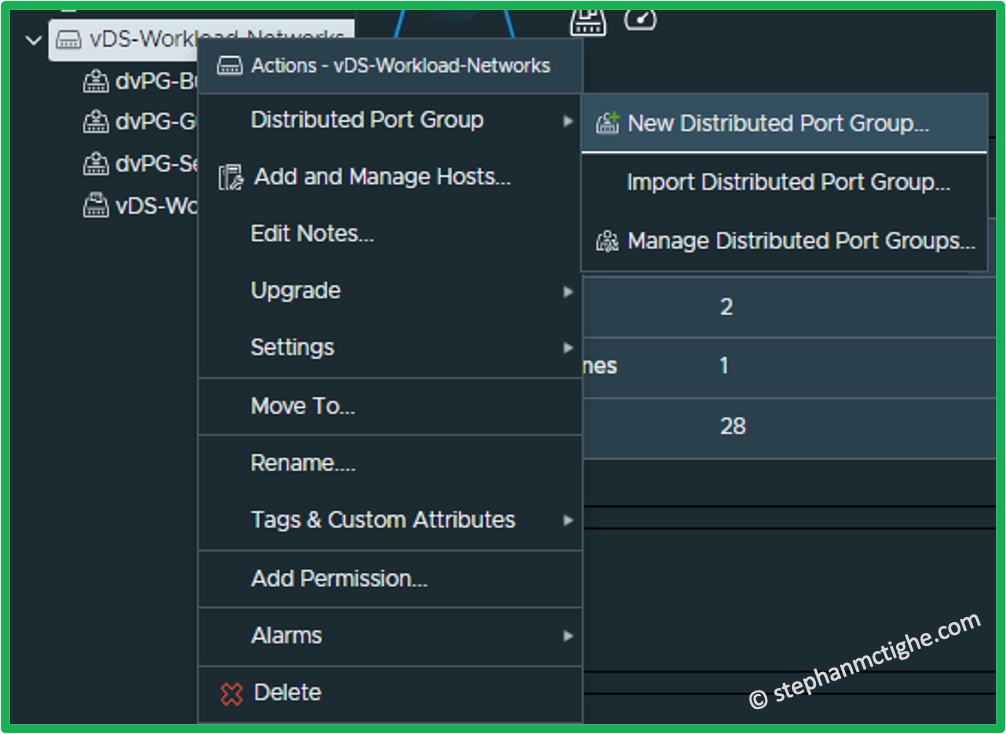
Different Tools; Same Result - vSphere Distributed Port Groups

As technology moves forward, more and more ways to achieve your goal become available. Many people still rely on the good old trusty GUI to achieve their goal, I know I do at times. Is this because it’s quicker, more comfortable or familiar? Or perhaps because they don’t realise there are other options out there!? This blog post will be one of many, where I highlight some of the options available for completing various technical tasks or configurations, in the hope it can provide additional options or tools for consideration.

  • PowerCLI
  • Terraform
  • PowerShell
  • vSphere
Tuesday, November 9, 2021 | 10 minutes Read
Hero Image
Getting Started With Packer to Create vSphere Templates – Part 5 – Bringing it Together!

Here we are, Part 5! If you have stuck with me through this series, thank you for taking the time. If not, you can catchup with Parts 1-4 by searching my blog! I wanted to end this series with something different to just text, code and images. So I am going to show you the end to end template deployment process with video’s using user defined variables but with a few environment variables in the Linux example.

  • Packer
  • vSphere
Tuesday, August 3, 2021 | 2 minutes Read
Hero Image
Getting Started With Packer to Create vSphere Templates – Part 4 – Blocks

Welcome to Part 4 of the Packer Series! In this part we will look at putting together all the block and files we need to deploy a template! As we have touched upon in earlier parts, we have multiple blocks and files available to us that can be used to make up a complete configuration. We will walk through a complete Source and Build Block here using user defined variables to complete the build. In the final part of this series, I will use a combination of user and environment variables to give you an idea of how you may use this outside of a lab.

  • Packer
  • vSphere
Wednesday, July 14, 2021 | 6 minutes Read
Hero Image
Getting Started With Packer to Create vSphere Templates – Part 3 – Variables

Welcome back to part 3 of my Creating vSphere Templates using Packer series, if you missed part 1 or 2, you can find them here and here. In part 3 we will explore variables! Why would we use variables? Variables allow you to specify customisations to your templating code without having to edit your actual build files. This can be useful when you are reusing code for multiple templates. There are multiple types of variables that can be used, but we will talk about 2 types of input variables in this blog. They are what I will refer to as; User defined variables and Environment variables. We will talk about both during the blog post and the use cases for each.

  • Packer
  • vSphere
Tuesday, July 6, 2021 | 6 minutes Read
Hero Image
Getting Started With Packer to Create vSphere Templates – Part 2 - Answer Files and Scripts

Welcome to part 2 of my Getting Started with Packer series, if you missed part 1, you can find it here. In part 2, we will take a look through an important part of creating your vSphere templates; Answer Files and scripts. Firstly, we will be looking at a couple of example scripts that can be used to configure your operating system before its turned into your template. We will then move on to answer files that allow an automated, non user prompting installation of your operating system. These answer files provide configuration details during the operating system installation.

  • Packer
  • vSphere
Tuesday, June 22, 2021 | 8 minutes Read
Hero Image
Getting Started With Packer to Create vSphere Templates - Part 1

Virtual Machines Templates, why? Templates are a great way to achieve consistent, repeatable and fast virtual machine (VM) deployments, be it an on-premise vSphere environment or cloud based environment. Having up to date VM templates for each of the operating systems you use, is key to being able to deploy infrastructure quickly and easily across multiple platforms. In this series of blog posts, I will be focusing on deploying virtual machine templates in vSphere, specifically vSphere 7, using a product called Packer by HashiCorp. Packer is an Infrastructure as Code tool specifically for template management.
  • Packer
  • Templates
  • vSphere
Tuesday, June 15, 2021 | 6 minutes Read
Hero Image
Enabling Native KMS in vSphere 7.0 Update 2

Some time back I wrote about setting up and enabling a HyTrust Key Management setup for vSphere to make use of VM and vSAN encryption. Following the release of vSphere 7.0 Update 2, VMware have introduced native key management capabilities! This is a great feature as you no longer require a potentially expensive separate key management solution to make use of vSphere’s encryption offerings. Lets take a look at this new capability by heading over to the Key Providers menu on your vCenter object, and selecting ‘Add Native Key Provider’:

  • KMS
  • vsphere
  • vSAN
Thursday, March 25, 2021 | 2 minutes Read
Hero Image
Get, Set and Remove Perennial Reservations Using PowerShell Functions

Having recently had to do some work with RDM perennial reservations I looked into ways to make this less of a manual headache. There are plenty of examples out there for doing this, which I took as a basis to make a PowerShell function. If anything it was a great way to refresh my PowerShell skills and an opportunity to learn some new skills. Note: Although this has been tested in my environment, please make sure you test it appropriately before running against a production environment!

  • PowerCLI
  • PowerShell
  • vSphere
Tuesday, March 9, 2021 | 3 minutes Read
Hero Image
Administering ESXi Hosts With ESXCLI using PowerCLI

There are times as a vSphere admin, you are going to want to run ESXCLI commands against multiple ESXi Hosts from a central location. This could be for configuration / administration, reporting, patching or a number of other things. Recently I have been testing different values in the /DataMover/MaxHWTransferSize advanced setting. To make life easier, I wanted a way to change multiple hosts quickly and easily. To do this, I customised a script that Luc Dekens posted as a solution to a problem someone was having that can be used to send ESXCLI commands to multiple hosts using PowerCLI and plink.exe. This slightly modified version uses a CSV file as a source containing my hosts FQDN and the username and password I will be connecting with.

  • ESXCLI
  • PowerCLI
  • vSphere
Wednesday, February 10, 2021 | 3 minutes Read
Hero Image
Deploying vCenter 7.0 via the CLI

Recently I decided it was time to add a second vCenter 7.0 Appliance to my main lab environment after the lab containing my SRM and vSphere Replication installation ceased to exist… I thought I would take the CLI route as its been a while, and thought I’d share! To begin, you need to decide what you are deploying. There are four deployment options available to you, which you can see listed below. To see the options, mount the vCenter ISO image, browse to vcsa-cli-installer\templates\install, and you will find 4 templates;

  • vSphere
Wednesday, January 27, 2021 | 7 minutes Read
  • ««
  • «
  • 1
  • 2
  • 3
  • 4
  • »
  • »»

Liability Notice: All content provided on this blog is for informational purposes only. I make no representations as to the accuracy or completeness of any information on this site or found by following any link on this site. I will not be liable for any errors or omissions in this information nor for the availability of this information. I will not be liable for any losses, injuries, or damages from the display or use of this information. The opinions expressed here are my personal opinions. Content published here is not read or approved in advance by any company mentioned and does not necessarily reflect the views and opinions of those companies nor does it constitute any official communication therein. Always check official documentation hosted by either company for support or verified technical information.


© 2026 Copyright.
Powered by Hugo Logo